RICERCA
RESEARCH PROJECT
Project development
This proposal presents an ambitious interdisciplinary project that requires expertise from flood modelling, hydro-meteorological and impacts analysis, and statistical modelling. In order to deliver the transformative vision of this project, it is essential that domain experts work collaboratively and closely in a genuinely integrated manner. Our team of investigators have considerable experience of working on large interdisciplinary projects, and recognise the importance of collective responsibility for delivering high quality research outputs. The shared development of the Project, as shown in the following table, and the activities within the scientific Working Packages will result in shared ownership of the results, which will ensure continued engagement of participants throughout the duration of the Project.

RESEARCH PROJECTS
WP1 - Project Management and Coordination
This work package ensures the scientific and administrative coordination of the project.
WP2 - Evaluate Risk
This work package focuses on improving the modelling of pluvial flooding in urban areas. It addresses the complexity of simulating stormwater behavior in densely built environments by analyzing current tools, models, and scientific knowledge. The goal is to build a shared foundation for engineers, planners, and stakeholders, and to standardize modelling practices through case studies and literature review. Expected results: a comprehensive manual summarizing the current state of knowledge in pluvial flood modelling; practical guidelines for evaluating and managing pluvial flood risk, based on real-world pilot applications.
WP3 - Mitigate Risk
It focuses on developing effective strategies to manage urban pluvial flooding by moving beyond traditional hazard-reduction approaches. It promotes integrated solutions that also address vulnerability and exposure, including flood-proofing systems and sustainable drainage measures (SUDS). The WP highlights the limitations of current design practices and proposes more robust, adaptive planning methods for different urban contexts.
Expected results: guidelines for selecting and combining structural mitigation measures; design recommendations for SUDS integrated with conventional drainage, guidance on implementing flood-proofing solutions; tools for assessing urban flood risk using multi-level mitigation strategies.
WP4 - Communicate Risk
It aims to improve flood risk awareness and encourage behavioural change among citizens and institutions. It focuses on developing tailored communication strategies—like interactive risk maps and social media outreach—to inform the public, promote preparedness, and enhance participation in decision-making. A key tool will be a dedicated website offering clear, non-technical flood risk information and community feedback channels. Expected results: user-friendly flood risk maps with colour-coded risk levels; a public website and social media presence for continuous communication; practical guidance on how to prepare for and respond to pluvial flooding; tools for collecting community input and feedback.
WP5 - Pilot Cases
This work package focuses on testing and refining the flood risk assessment procedures developed in previous work packages. Using real-world pilot cases, the goal is to validate the methodology, identify gaps, and improve its applicability through iterative feedback. Two pilot areas (Messina and Naples) are analyzed for their unique vulnerabilities to pluvial flooding, enabling the development of practical, location-specific solutions. Expected results: evaluation and improvement of the overall flood risk procedure; tailored risk assessments for the pilot cases in Messina and Naples; identification of innovations and adjustments to enhance urban flood resilience.
WP6 - Transfer of Results and Dissemination
It focuses on developing effective strategies to manage urban pluvial flooding by moving beyond traditional hazard-reduction approaches. It promotes integrated solutions that also address vulnerability and exposure, including flood-proofing systems and sustainable drainage measures (SUDS). The WP highlights the limitations of current design practices and proposes more robust, adaptive planning methods for different urban contexts.
Expected results: guidelines for selecting and combining structural mitigation measures; design recommendations for SUDS integrated with conventional drainage, guidance on implementing flood-proofing solutions; tools for assessing urban flood risk using multi-level mitigation strategies.
Objective of this work package (WP5) is to test, validate and improve the developed procedure.
- Italian cities need to become more resilient to surface flooding through new integrated systems for monitoring, modelling, and multiscale analysis, providing a ‘systemic’ approach that enables targeted risk mitigation across the city during an event.
- This entails a radical shift in stormwater flood management, enhancing the understanding of potential impacts and promoting faster recovery for individuals, communities, and buildings.
.

➡️ To achieve this goal, the project collectively addressed an integrated set of research objectives; by conducting analyses on two case studies, located in Sicily and Campania, while generalizing the results to make them applicable to various Italian contexts, it was possible.
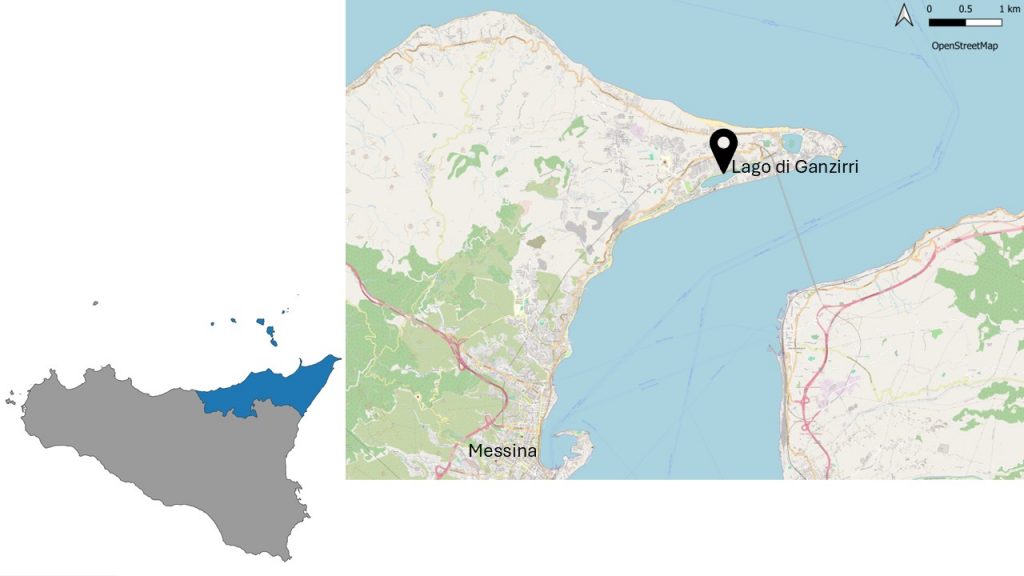
Pilot case #1: MESSINA
This pilot case proposed for the town of Messina is the area of “Laghi di Ganzirri” in the northern part of Messina city area. The site is located close to the sea and it is a natural reserve (Special Protected Area). In this area, many touristic and residential settlements are located while the lakes and the lakefront are used for leisure, sports, walking, etc. This area is subjected to frequent pluvial flooding due to its very peculiar topographic characteristics (the area is close to the sea and very flat). The main concerns mostly regard the accumulation of surface runoff in the central part of the pilot area (which, along with the overall poor conditions of manholes, make the storm water collection hard) and to the contributions in terms of additional surface runoff volumes coming from a number of adjacent catchments characterized by very steep slopes and large drainage areas.
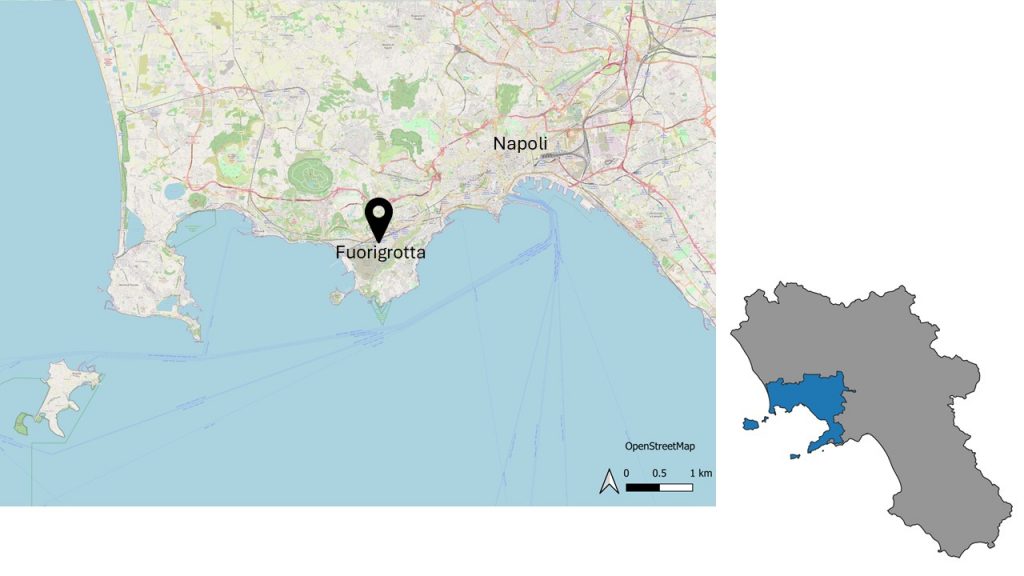
Pilot case #2: NAPLES
The case study of Fuorigrotta (one of the administrative units of the city of Naples, located in the western part of the urban area) is particularly suitable to exploit pluvial flooding analysis. The pilot area chosen for the analysis is about 2 km² and it roughly coincides with the stormwater drainage catchment serving the neighborhood, which, in turn, is part of the complex and stratified combined sewer system of the City. Due to its peculiar topographic features, the drainage efficiency of the sewer system in the area has always been limited, and a large number of enhancements, retrofitting and extraordinary maintenance interventions have been proposed.
All the above-mentioned issues have a deep influence on the hydrological and hydraulic processes, exacerbating the flood hazard conditions of the area. In detail, the transport and road infrastructures proved to be the most vulnerable to pluvial flooding, with cascading indirect damages due to service disruption caused by traffic jams and railroad flooding. Moreover, damages to underground facilities, such as metro stations, but also garages and basements, are often experienced.