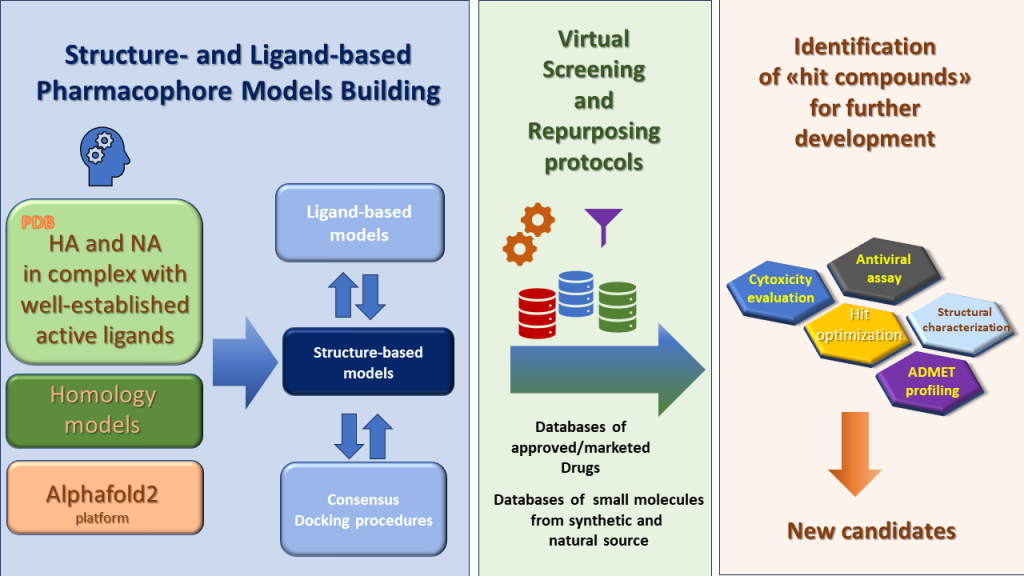
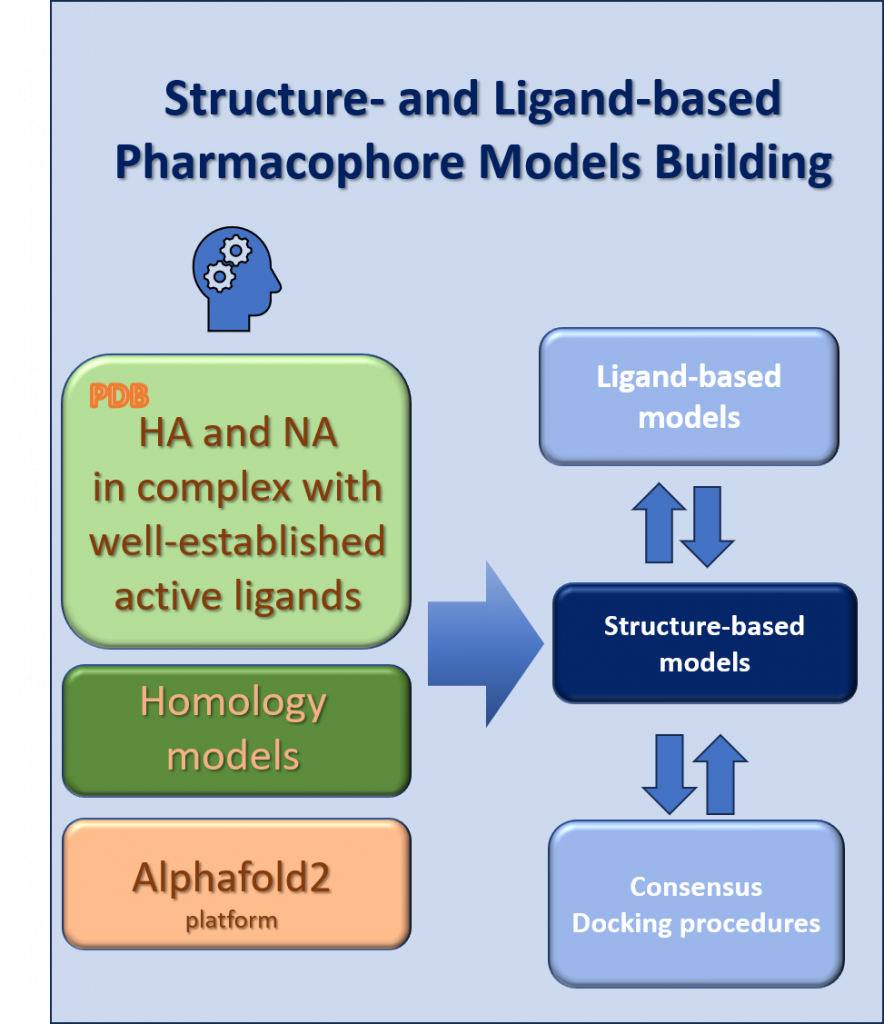
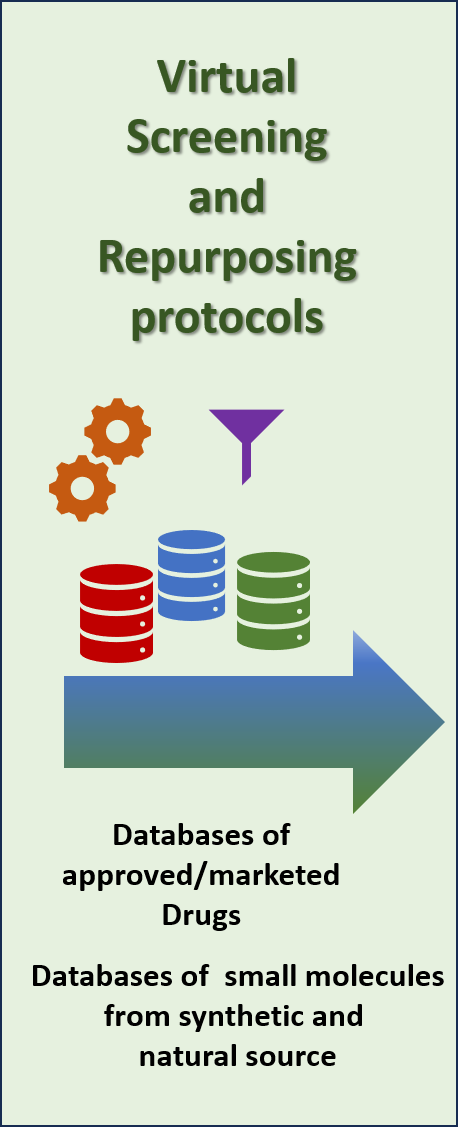
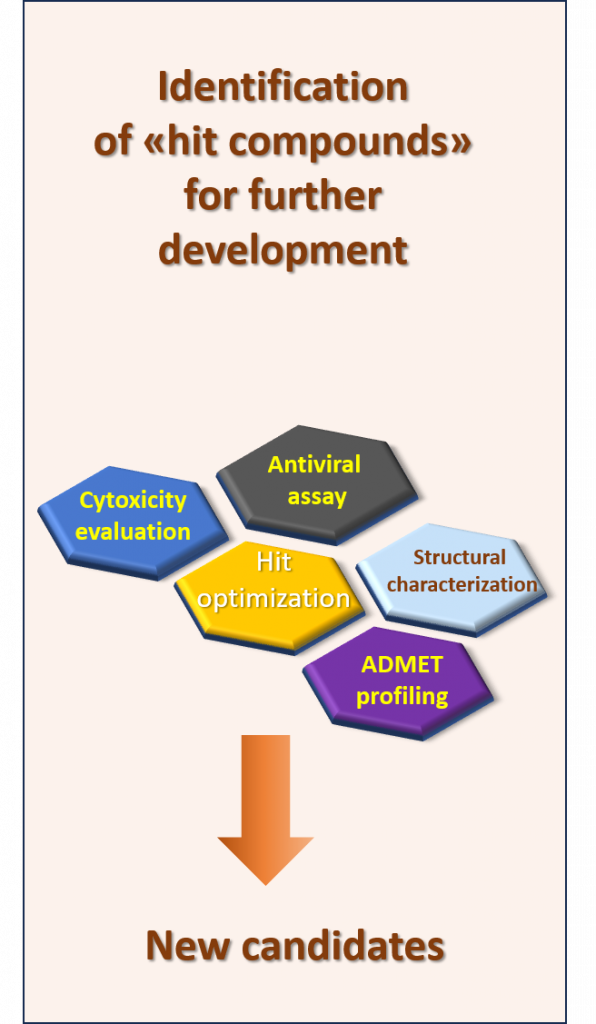
The HANAIN project is an interdisciplinary activity, involving researchers from the University of Messina and the University of Salento with extensive experience in medicinal chemistry, virology and bioinformatics. The project is part of a broad research program funded by the INF-ACT Foundation to address the urgent need for novel therapeutic agents for the treatment of emerging infectious diseases in humans, pursuing the so-called “One Health” approach.
Influenza viruses can cause contagious respiratory diseases in humans and several species of mammals and birds. Influenza viruses belong to the Orthomyxoviridae family and are classified into influenza viruses A, B, C, and D. Among these, influenza viruses A and B (IAV, IBV) cause respiratory illnesses ranging from mild to severe seasonal epidemics.
IAVs, known to cause pandemics, are classified based on the proteins hemagglutinin (HA) and neuraminidase (NA), which decorate the surface of the viral particles.
Effective antiviral agents could generally provide valuable benefits as first-line therapy against IAV pandemics as an alternative therapeutic strategy to vaccination, which generally represents the best method for protecting immunocompetent individuals from morbidity and mortality. However, vaccine therapy tends to be less effective due to the effects of viral strain variants.