SPEAKERS 2026

SPEAKERS

SPEAKERS

  • Farida Farsian (INAF, GAM)
  • Salvatore Cucinotta (GAM)
  • Francesco Tenchini (Università di Bari, INFN)
  • Gioacchino Alex Anastasi (Università di Catania, INFN)
  • Antonio Trifirò (Università di Messina, INFN)
  • Massimiliano De Pasquale (Università di Messina, INAF)

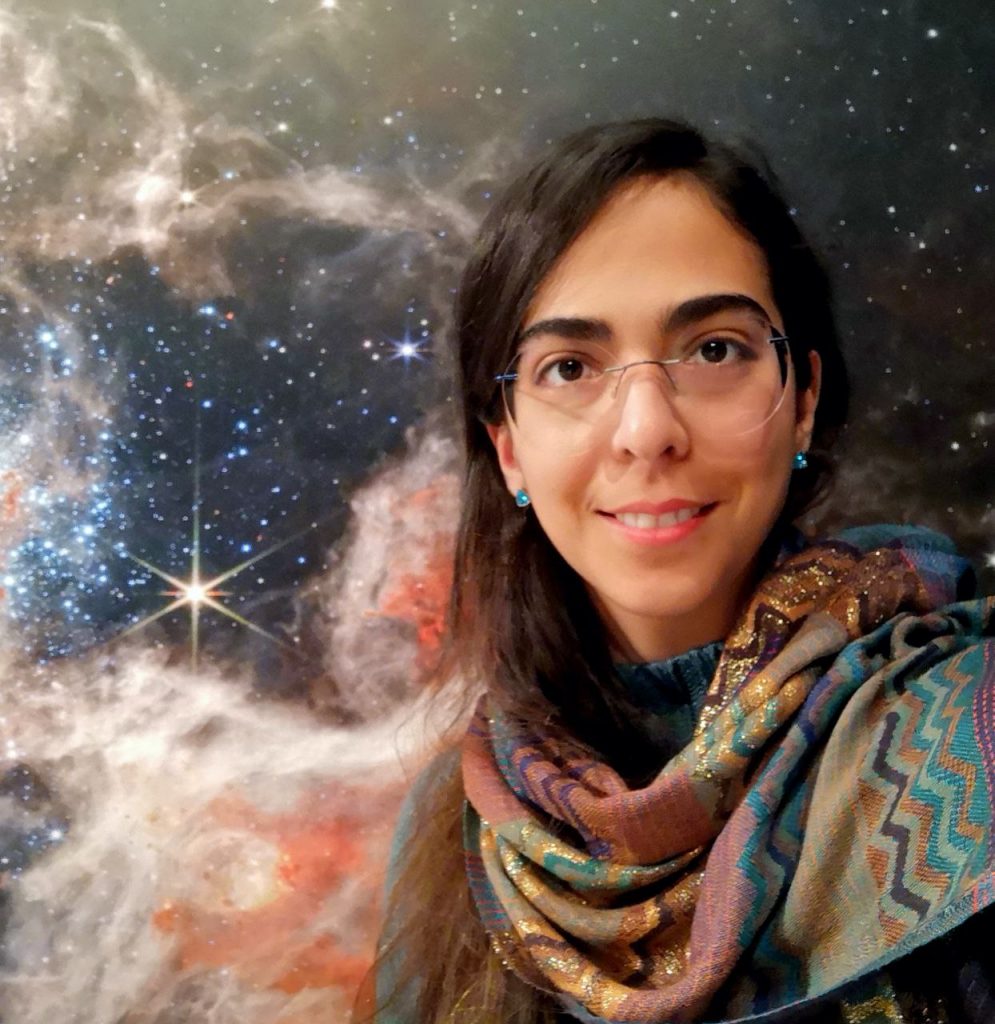
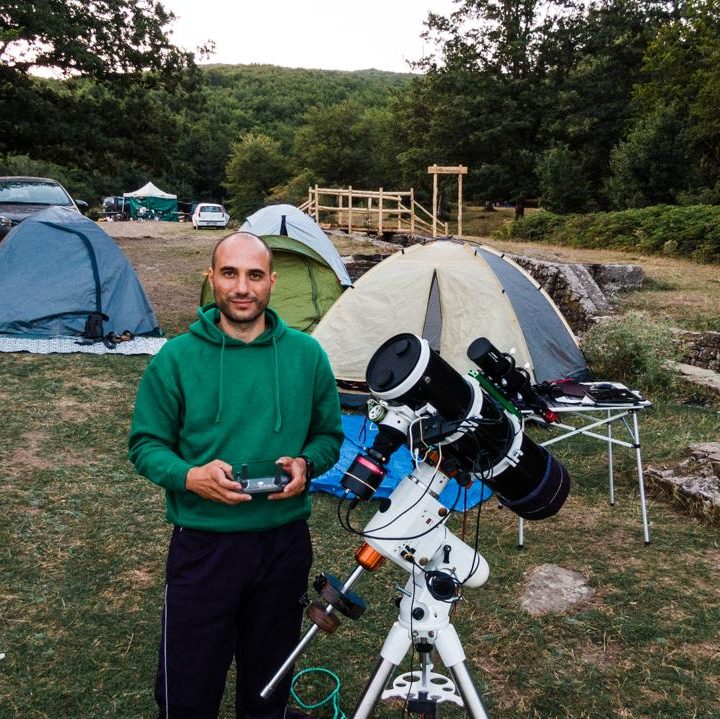
Farida Farsian & Salvo Cucinotta

INAF, Catania, Italy

Gruppo Astrofili Messinesi (GAM)

How to Observe the Sky & Astrophotography

In this session, we’ll introduce you to the work of the Messina Amateur Astronomers Group and the passion that drives those who observe the sky. It all starts with what comes to us from space: a precious trace that tells stories from far away in time and space.
We’ll see together how this information can be collected with tools accessible to even the most astronomers, demonstrating in a simple way how an astronomical image is created. Finally, we’ll explore some of the most fascinating objects in the sky, to understand what they are and why they shine above us.

francesco-tenchini-1

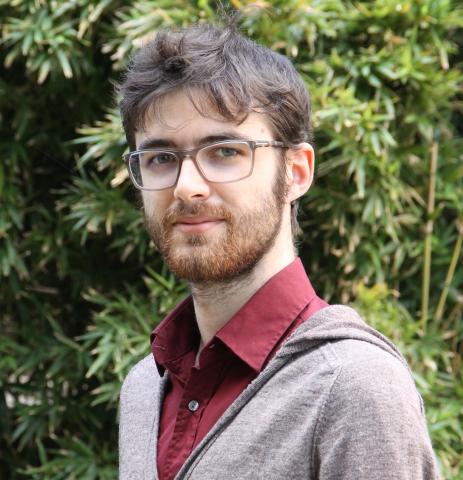
Francesco Tenchini

University of Bari, Bari, Italy

INFN

Photon beams at the LHC and their interaction with matter

Hadronic colliders are the frontier of high-energy experiments. Although the beams are composed of nuclei, they can be used to generate photon sources and study their interaction with the elementary constituents of matter at very high energies.

Giocchino Alex Anastasi

Gioacchino Alex Anastasi

University of Catania, Catania, Italy

INFN

The Evolution of the Universe’s Messengers

For millennia, astronomy relied exclusively on observing celestial bodies through visible light. This was until the last century, when the ability to observe the cosmos across the entire electromagnetic spectrum ushered in a paradigm shift, in which the same source could be viewed through different lenses, represented by different wavelengths.

In this talk, I will attempt to describe this evolution in our ability to observe the Universe, starting with photons and moving on to cosmic rays (charged particles), neutrinos, and finally gravitational waves, the discovery of which dates back just over 10 years.

Finally, I will present a couple of results from the synergies between these observations, with the aim of achieving a multi-messenger astronomy, astrophysics, and astroparticle physics that will allow us to study the darkest phenomena in the Universe, where photons are no longer sufficient to “shed light.”

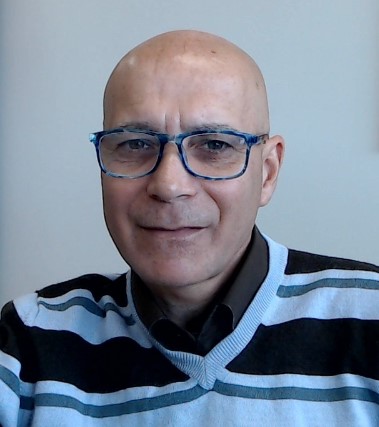
Antonio Trifirò

Antonio Trifirò

University of Messina, Messina, Italy

INFN

Light-Matter Interaction: The Role of the Refractive Index in Detector Physics

The refractive index of light is a fundamental quantity in describing the interaction between electromagnetic radiation and matter and plays a key role in the physics of many particle detectors. Starting from simple physical principles related to the propagation of light in material media, we will demonstrate how a concept from classical optics has become an essential tool in modern physics.

Massimiliano de pasquale 2

Massimiliano De Pasquale

University of Messina, Messina, Italy

INAF

Gamma-ray Bursts: The Brightest Sources in the Universe

Capable of converting the mass of the sun into energy in just a few hundred seconds, with a luminosity equal to 1,000 supernovae, gamma-ray bursts (GRBs) are the most powerful explosions in the universe. After 60 years of investigation, we now know that they are produced either by the death of stars much larger than the sun or by the collision of two inconceivably dense objects, such as two neutron stars or a neutron star and a black hole. We now know that GRBs also produce enormous quantities of gravitational waves. I will summarize the investigations conducted using satellites and ground-based telescopes that have allowed us to reconstruct what happens in these extreme events that defy the laws of physics.

Sponsor 2026