a city of timeless heritage, vibrant traditions, breathtaking landscapes, and unforgettable cuisine.
Messina and the sea: a love story from the origins
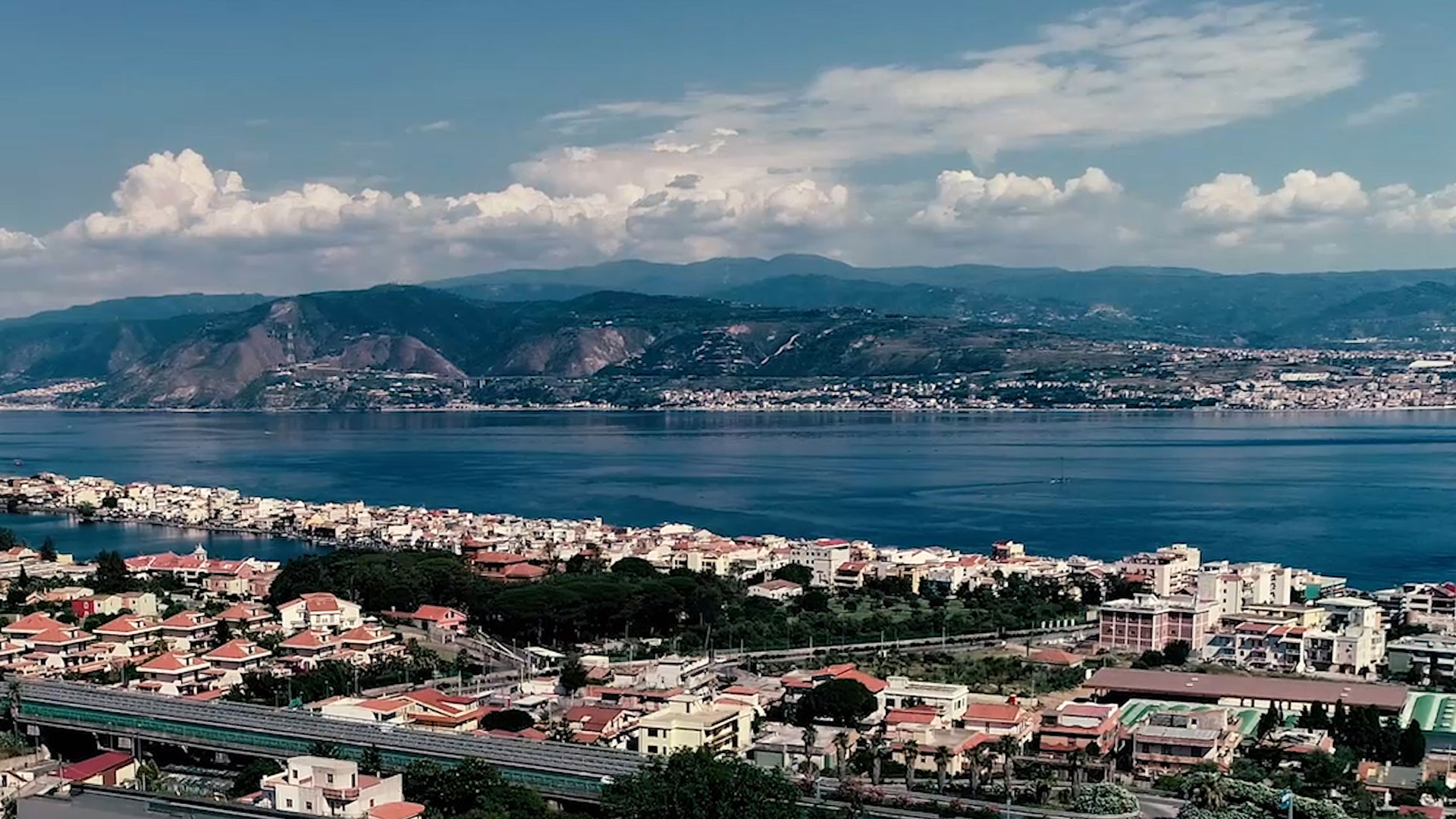
Messina rises on the northeastern tip of Sicily, overlooking the strait that bears its name, where the Ionian and Tyrrhenian Seas meet in a setting of rare beauty and unique natural features that inspired ancient myths and legends. The city is immersed in the vivid colours of the Mediterranean, with green hills and wooded mountains as its backdrop. Whether visiting historic buildings or natural parks, the horizon is always defined by the sight and colours of the sea.
The past and present of Messina are deeply rooted in its bond with the sea. Travellers arriving in Sicily by crossing the Strait are welcomed by the natural harbour of Messina—its calling card—recognizable by its distinctive sickle shape. The statue of the Madonna of the Letter, the city’s patron saint, stands at the harbour entrance. It is an iconic monument and one of the most recognizable symbols of Messina. It was precisely because of its arched, sickle-like harbour that Greek colonists who founded it in the 8th century BC named the city Zancle (from zanklon, “sickle”). Throughout the centuries, the harbour has played a crucial role in trade, naval strategy, and cultural exchange, making Messina one of the most influential maritime hubs in Southern Europe for over two millennia.
The Capo Peloro Lagoon Nature Reserve, located in the northern part of the city, is recognized as a site of international importance and is included in the UNESCO Water Project. Unique for its natural and scenic features, the reserve is defined by two brackish lakes connected to both the Ionian and Tyrrhenian Seas. It provides an ideal habitat for the conservation of hundreds of native plant and animal species and serves as a vital resting and feeding area for numerous migratory birds.
In 2025, Messina was awarded the international "Blue Flag" recognition, becoming the first metropolitan city in Italy to receive this prestigious honour. The award was granted for the quality of its bathing waters and its commitment to environmental sustainability, covering approximately 11 kilometres of coastline from the north to the south of the city.
A journey through art and culture
Messina bears the influence of the many peoples who shaped it over the centuries, a heritage reflected in its architecture, culture, and traditions. Its strategic position drew Greeks, Romans, Byzantines, Arabs, Normans, and Spaniards—each leaving distinctive cultural and architectural marks. Although earthquakes and wars have destroyed many traces of its long history, Messina still offers visitors a wealth of artistic and historical treasures.
Piazza Duomo is the artistic heart of the city, a delightful space where the cathedral, its bell tower and the Fountain of Orion are set. The Cathedral of Messina is a Norman masterpiece which, although rebuilt after the 1908 earthquake and World War II bombings, preserves its elegant architecture, beautiful wooden ceiling, stunning apse mosaics, and Italy’s largest organ. The adjacent Museum of the Cathedral Treasure collects precious liturgical objects crafted mainly by local goldsmiths and silversmiths. Beneath the cathedral, the underground church of Santa Maria sotto il Duomo—recently restored—features frescoes, stuccoes, and architectural elements from various periods.
Beside the cathedral, the Bell Tower houses the world’s largest and most intricate mechanical and astronomical clock. Every day at noon, its gilded bronze statues animate in a striking display tied to the civil and religious traditions of the city. Visitors can explore the interior mechanism and enjoy panoramic views over Messina and the Strait from the top. Facing the cathedral, the Renaissance Fountain of Orion is considered one of the finest sixteenth-century fountains in Italy.
One of Messina’s most iconic landmarks, the Temple of Cristo Re, rises above the city and is the first monument seen from the sea, standing prominently on a hill shaped by centuries of history. Standing on a nearby hilltop, the Sanctuary of Montalto, whose origins are linked to the Sicilian Vespers, offers sweeping panoramic views over the city.
A stroll along Via Garibaldi, one of Messina’s main thoroughfares, reveals two more artistic treasures: the Church of the Annunziata dei Catalani, dating back to the Norman era and bearing witness to the many dominations that have shaped the city over the centuries, and the Vittorio Emanuele Theatre, a 19th-century neoclassical building that houses a fresco by Renato Guttuso dedicated to the legend of Colapesce.
The Regional Museum of Messina (MuMe) preserves the artistic heritage of the city from the 12th to the 18th century, including masterpieces by Caravaggio and Antonello da Messina, as well as architectural remnants saved after uprisings and earthquakes.
Culinary delights
Messina is renowned worldwide for its exquisite cuisine and rich gastronomic traditions. Its restaurants and pastry shops are a true paradise for food lovers, offering an array of local specialties that reflect Sicilian culinary culture with a strong Arab influence. Fresh local vegetables and seafood—especially swordfish, the “King of the Straits”—feature in many dishes and are widely used in Messina’s restaurants. The city is also renowned for its pastry specialities, including cannoli, pignolata, cassata, and a wide variety of ice creams and granita. Messina and its surroundings attract chefs and wine enthusiasts alike, thanks to its fertile vineyards producing exceptional wines, including the DOCs Faro, Mamertino, and Malvasia delle Lipari.