
Speaker Profile
Nirmalya Roy is a Professor in the Information Systems Department at the University of Maryland, Baltimore County (UMBC), where he leads the Mobile, Pervasive, and Sensor Computing (MPSC) Lab. He also serves as Director of the Center for Research in Use-Inspired Cyber-Physical Systems (CYPRESS) and Associate Director of the Center for Real-time Distributed Sensing and Autonomy (CARDS) at UMBC. Dr. Roy leads several major research initiatives, including the DoD-funded MAGNUS: Advancing AI, Robotics, and Networking Research through a Multi-Domain Testbed for Defense Innovation and the NSF-funded AI-Ready TRACE: Testbed for Disaster Resilience Auditing and Crisis Evaluation at UMBC. His research focuses on applied artificial intelligence and machine learning with applications in smart health, cyber-physical systems, the Internet of Things (IoT), robotics, and autonomous systems. His research contributions have been recognized through numerous best paper awards, including IEEE/ACM DCOSS-IoT (2023), SmartComp (2023, 2022), SPIE (2022), CHASE (2021), IGSC (2020), Elsevier PMC (2020), QShine (2009), and PerCom (2006). He also serves as a co-PI on the ArtIAMAS (AI and Autonomy for Multi-Agent Systems) Cooperative Research Agreement with the Army Research Laboratory (ARL), in collaboration with the University of Maryland, College Park (2021–2026). Dr. Roy has secured approximately $7 million in external research funding from organizations including the U.S. Department of Defense (DoD), Army Research Laboratory (ARL), Office of Naval Research (ONR), National Science Foundation (NSF), Alzheimer’s Association, Constellation E2: Energy to Educate, and the UMB–UMBC Research and Innovation Partnership. His NSF-funded portfolio includes EAGER, CPS, CAREER, US–India Collaborative Research, REU Site, and GCTC programs. He received his B.E. degree in Computer Science and Engineering from Jadavpur University in 2001 and his M.S. and Ph.D. degrees in Computer Science and Engineering from the University of Texas at Arlington in 2004 and 2008, respectively. He is also the co-founder of AI Sense LLC, an early-stage startup supported through NSF SBIR/STTR Phase I funding. Additional information on his students, research projects, testbeds, and startup activities can be found through the MPSC Lab || REU SCC || CYPRESS || CARDS || TRACE || MAGNUS || AI Sense LLC.
Speaker Profile
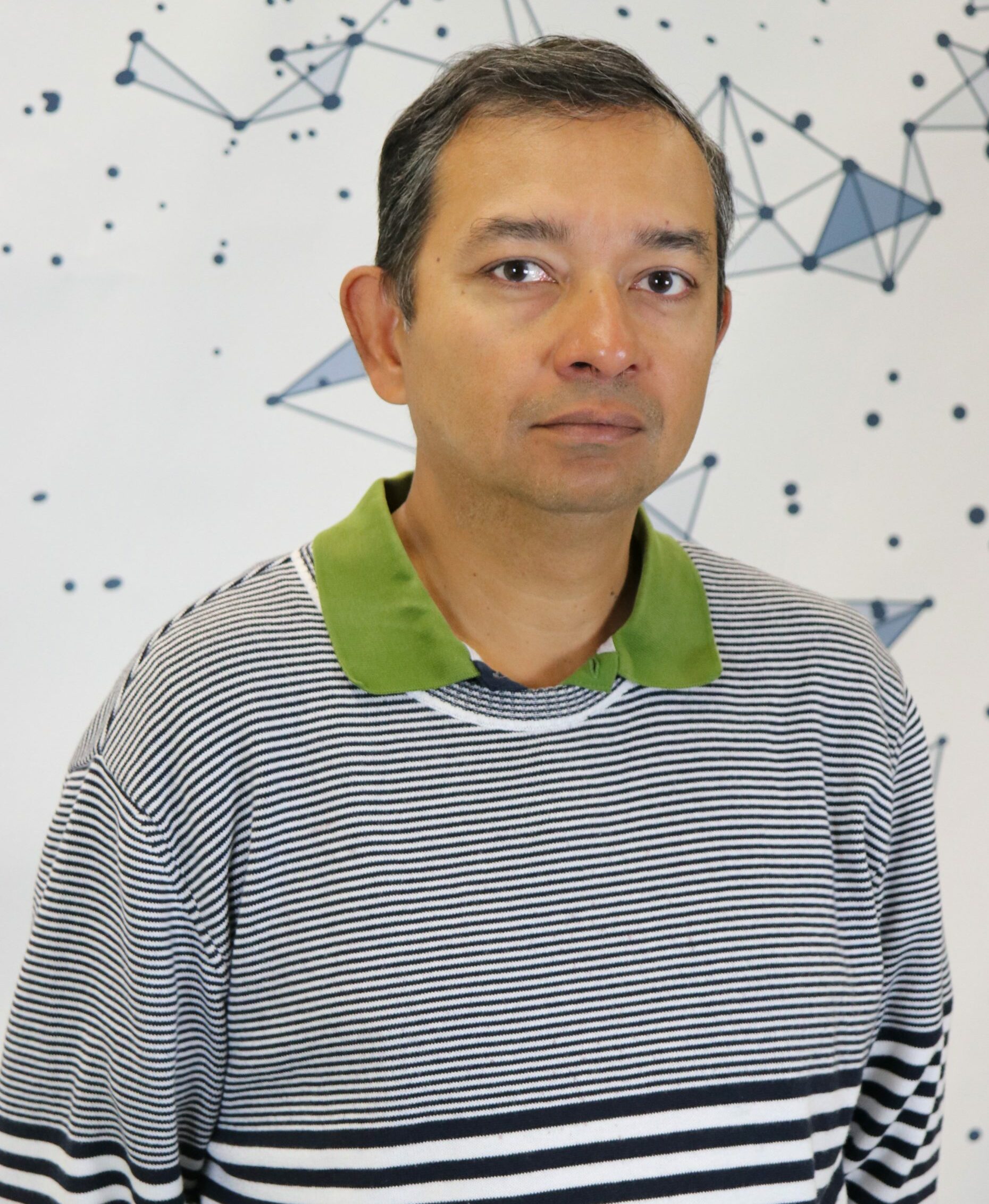
Suman Banerjee is the David J. DeWitt Professor in Computer Sciences at UW-Madison where he is the founding director of the WiNGS laboratory which broadly focuses on research in wireless and mobile networking systems. He is the inaugural recipient of the ACM SIGMOBILE Rockstar award and a recipient of the NSF Career Award. He is a recipient of multiple award papers at various conferences, such as ACM MobiCom, ACM CoNEXT, and IEEE Dyspan. Further, technology developed by Prof. Banerjee have won various accolades including the first prize at the Wisconsin Governor's Business Plan Competition in 2011 and in the Interdigital Innovation Challenge in 2012. He was a co-founder of multiple startups, including StratusWorx (acquired by Ericsson in 2020), and OnTracMD (merged with MiCarePath in 2022). He served as the chair of ACM SIGMOBILE between 2013 and 2017. He is a fellow of the ACM and of the IEEE.